
LESSON 5 · The DNA Blueprint
Editing Human Genes
In 2012, Jennifer Doudna and Emmanuelle Charpentier proved you could feed CRISPR-Cas9 a synthetic guide RNA and make it cut DNA at any spot you picked. With that, an ancient bacterial trick became the most precise gene-editing tool ever built — and one any lab could use.
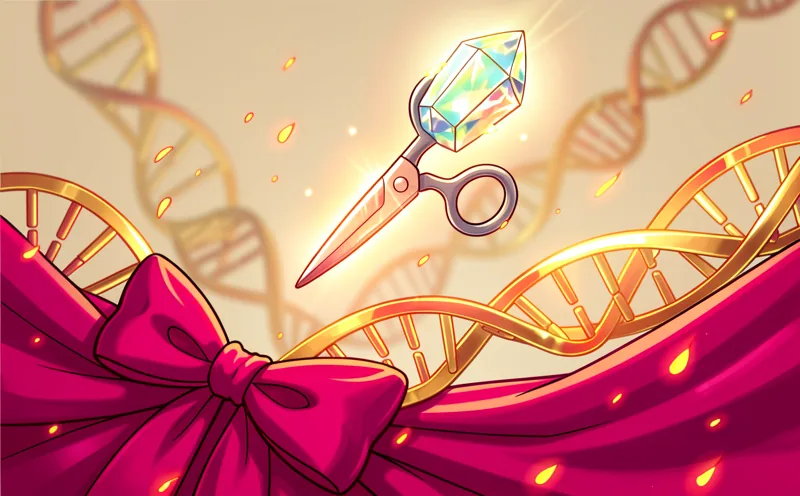
CRISPR can switch a gene off, swap it out, or paste a new one in. Take sickle cell disease: the fix does not even touch the broken gene. Instead, CRISPR flips back on the fetal hemoglobin gene that every body shuts down after birth. That spare blood-making program takes over, and patients who hurt for a lifetime start making healthy red cells.