
LESSON 3 · Patterns in Nature
Math in the Sky
Every eclipse you will ever see was predicted centuries in advance by math. Kepler worked out the shape of planetary orbits from Tycho Brahe's data. Einstein used tensor calculus to show how starlight bends around the Sun — confirmed in the 1919 eclipse that made him world-famous.
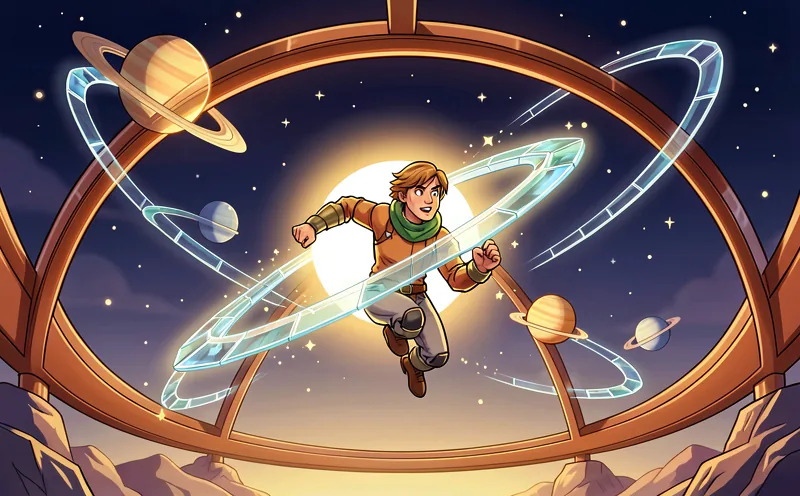
Modern astronomy is essentially applied mathematics. The James Webb telescope aligns its 18 mirror segments using calculations precise to nanometers. GPS clocks even correct for two relativistic effects — one from each satellite's speed, one from its weaker gravity in orbit — or your location would drift by kilometers a day. The night sky, it turns out, runs on equations.