
LESSON 2 · Black Holes: Where Physics Breaks
Black Hole Mergers
When galaxies merge, their central supermassive black holes eventually find each other and combine. This process takes hundreds of millions of years. First the black holes orbit their shared center of mass, then they spiral closer through a process called dynamical friction, and finally they merge in a burst of gravitational waves.
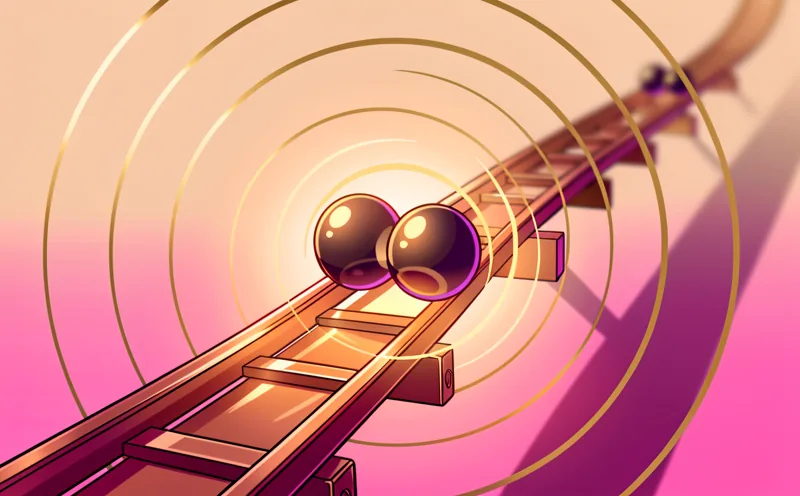
The merged black hole can receive a gravitational kick from lopsided wave emission, sometimes fast enough to launch it out of the galaxy entirely. Astronomers have spotted candidate "wandering" supermassive black holes — massive objects displaced from galactic centers, drifting alone through intergalactic space.