
LESSON 4 · Rise & Fall of Rome
The Battlefield Found
For centuries, the battle's location was a mystery. Then in 1987, a British army officer named Tony Clunn went metal detecting near Kalkriese, Germany. He found Roman coins — hundreds of them, all minted before the year of the battle. It was the first hard proof that the great ambush had happened right there in the Kalkriese hills.
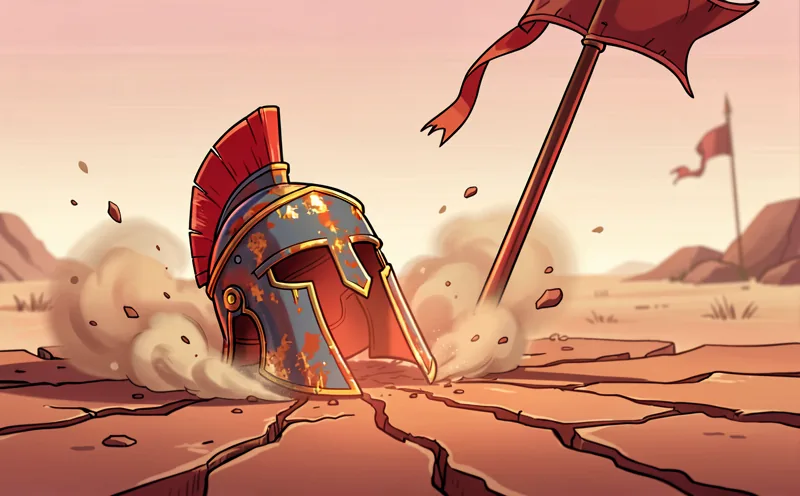
Later excavations revealed a sprawling battlefield, with Roman finds scattered across an area of roughly 17 square kilometers. Archaeologists uncovered Roman armor, weapons, and bone pits where bodies had been hastily buried.
Most intriguing of all, they found the remains of a sand-and-turf wall. For years this was read as a Germanic ambush barrier, built in advance to funnel the marching Romans straight into the kill zone — though recent dating has cast real doubt on that interpretation, and some researchers now argue the wall may be far younger than the battle itself.