
620Share
Communication
About 65% of meaning in face-to-face conversation comes from things other than words.
Tone, rhythm, posture and micro-expressions carry most of the message. The exact words you choose matter far less than how you deliver them.

NOW WATCHING
Communication · Facts
Tone, rhythm, posture and micro-expressions carry most of the message. The exact words you choose matter far less than how you deliver them.
 Swipe up or down to explore more
fMRI scans show personal names light up the brain's middle frontal cortex differently from any other word. People feel seen, even when they don't notice why.

Studies of jury behaviour and hiring panels found a 1–2 second pause before responding consistently increased perceived competence and trustworthiness.

'Why did you do that?' triggers defence. 'What were you trying to solve?' invites explanation. The same question, different brain response.

The primacy-recency effect means the middle of your pitch evaporates from memory within minutes. Put your strongest line at the start or the very end.

Psychologists call it the 'chameleon effect': we copy the posture and gestures of those we feel rapport with — and deliberately mirroring back can help build it.

The orbicularis oculi around the eyes fires only in real (Duchenne) smiles. Forced smiles miss it, which is why staged photos often look subtly 'off.'

Studies show senders think their tone is clear about 80% of the time, but readers correctly identify it only ~half — barely better than a coin flip.

Harvard scans found self-disclosure activates the same dopamine-linked regions as food or money — which is why people enjoy talking about themselves so much.

Communication research finds about two-thirds eye contact signals confidence; much more starts to feel aggressive, and much less comes across as evasive.

The classic 'foot-in-the-door' studies show a small initial favor sharply raises compliance with a much larger one later — consistency pressure does the work.
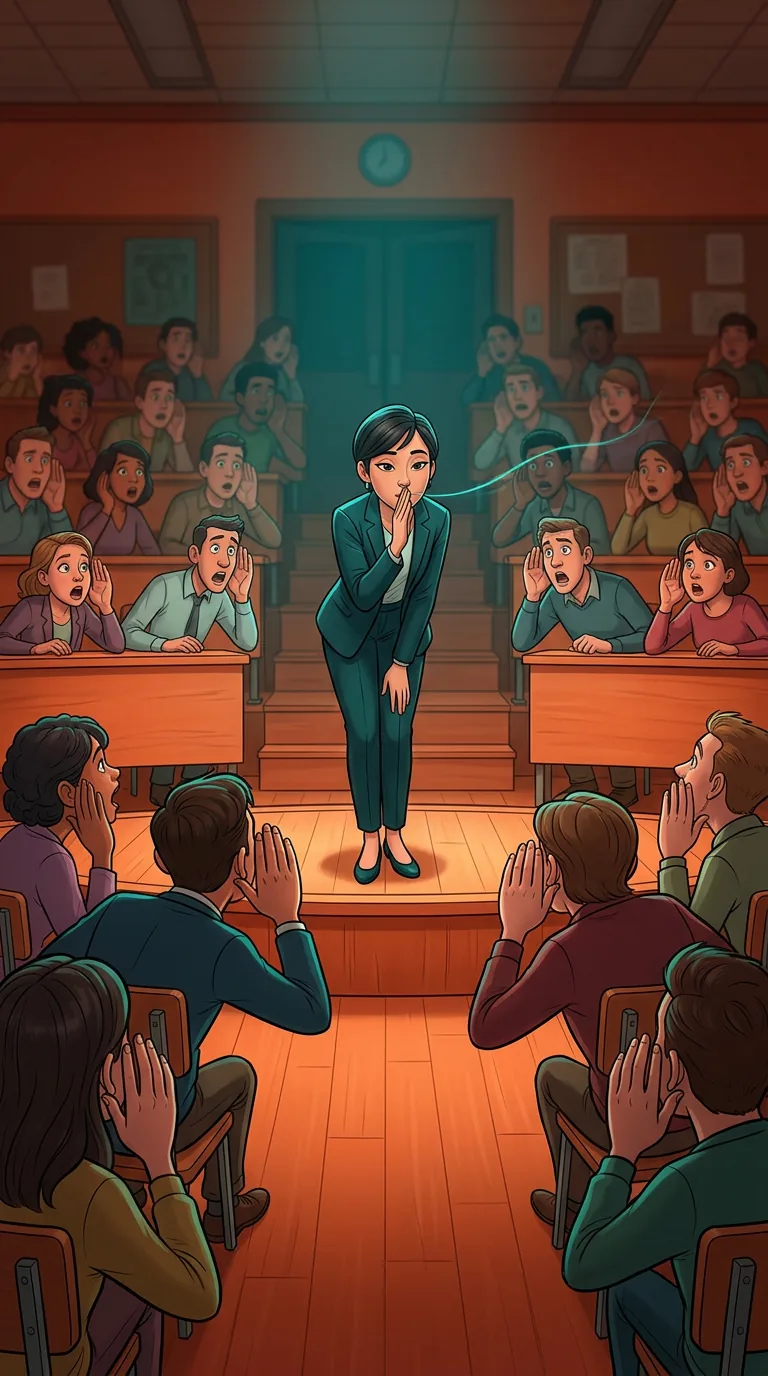
A sudden drop in volume makes listeners lean in and focus; teachers and negotiators exploit it because contrast, not loudness, is what captures attention.

Princeton research found snap trust judgments form in about 100 milliseconds, and longer looks mostly just reinforce that lightning-fast first impression.

A famous Langer experiment found 'because' raised compliance sharply, even when the reason that followed was empty filler that explained nothing at all.

Studies of married couples found 'we' and 'us' language during conflict predicted lower stress and more constructive resolutions than blaming 'you' language.

A study tracking thousands of people debunked the myth that women talk far more — both averaged roughly 16,000 words daily, with huge person-to-person variation.

Linguists find a brief 'um' signals that an important word is coming, aiding comprehension and recall — so a few fillers aren't the disaster speakers fear.

'Anchoring' research shows whoever states the opening figure drags the final price toward it — even when both sides know the number was somewhat arbitrary.

Skilled interviewers and negotiators stay quiet after asking; the discomfort of the pause pushes the other side to reveal more than they originally planned.

The 'Ben Franklin effect': doing someone a small favor makes us like them more as the mind justifies the effort — so asking a favor can quietly build a bond.

Direct face-to-face can read as confrontational; turning slightly to the side lowers perceived threat, which is why hard talks often go better on a walk.

'Speech-rate convergence' — gently aligning to another person's tempo — raises likability and perceived similarity more than copying their actual words.

Interviewers and therapists find 'tell me about…' draws far richer answers than questions answerable in one word — a simple lever most people forget to pull.

Names are arbitrary labels with nothing to hook onto, while faces tie to rich visual memory — which is why 'I know your face, not your name' is universal.

Hostage negotiators call it 'mirroring': echoing the final words of what someone said signals listening and reliably nudges them to expand and reveal more.