
179Share
English
The English word 'set' has more meanings than any other word — over 430.
The Oxford English Dictionary lists hundreds of distinct senses for 'set' across verbs, nouns and adjectives. 'Run' is catching up with around 645 senses now.

NOW WATCHING
English · Facts
The Oxford English Dictionary lists hundreds of distinct senses for 'set' across verbs, nouns and adjectives. 'Run' is catching up with around 645 senses now.
 Swipe up or down to explore more
There's no Academy of English. French has the Académie française, Spanish has the Real Academia. English evolves entirely by usage and dictionaries play catch-up.

Despite English having over 170,000 words in current use, daily speech relies on a tiny core. Learn those 3,000 and you understand 95% of casual conversation.

Comprehensible input research shows context-rich exposure builds vocabulary 3–4× faster than isolated word drills — your brain learns words the way it learned its first ones.
'I.' — a pronoun functioning as a complete utterance in response to questions like 'Who did this?' English allows single-word sentences more freely than most languages.
Though English borrowed huge vocabulary from French and Latin, its most frequent words — the, of, and, is, to — are overwhelmingly Old English in origin.

German has 'übermorgen' and Spanish 'pasado mañana,' but English needs a phrase — a small gap that quietly shapes what feels easy to say.

gh as in 'enough,' o as in 'women,' ti as in 'nation' — a famous joke exposing just how unreliable English's spelling-to-sound mapping really is.

Born as a joke abbreviation in 1830s Boston newspapers, 'OK' spread worldwide and is now recognized across nearly every language and culture alive.
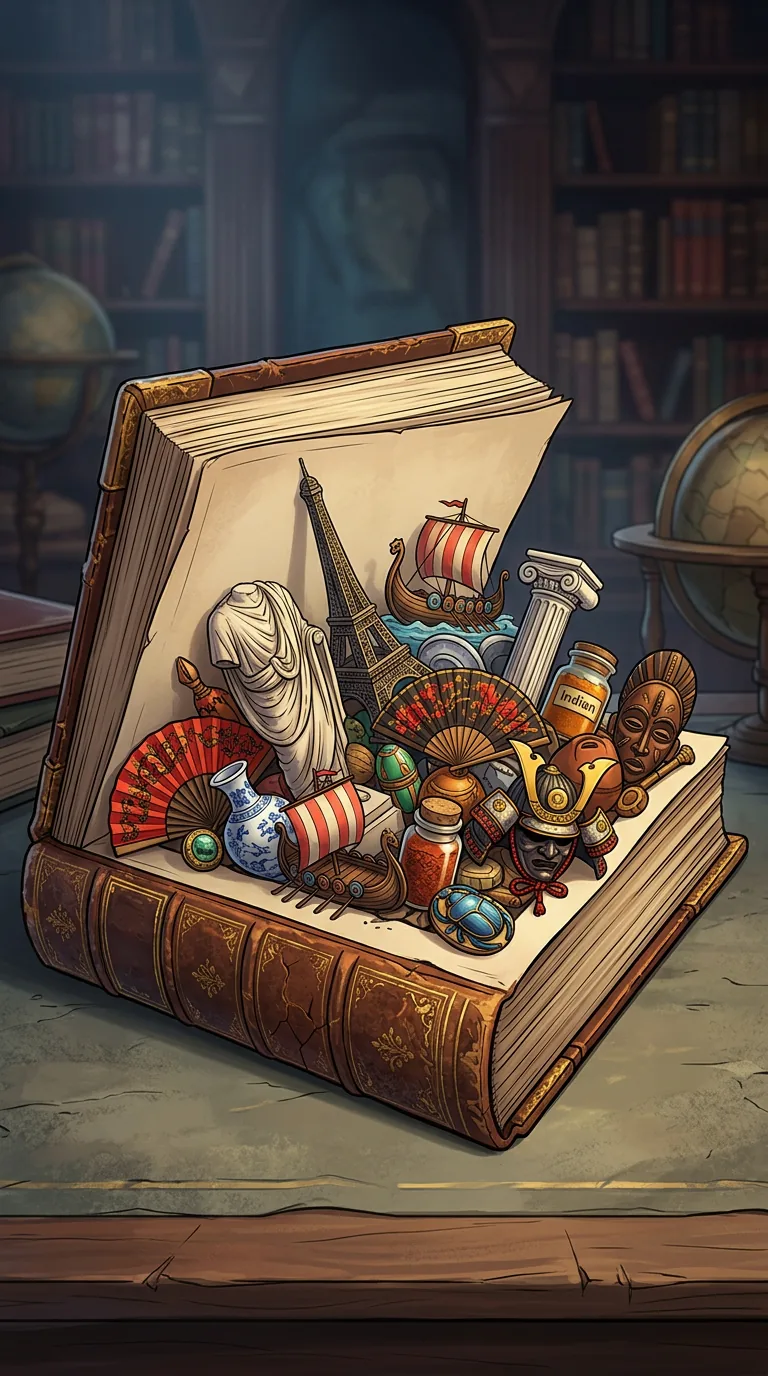
Centuries of invasion and trade left English with a French- and Latin-heavy dictionary; it's often called a 'borrowing' language more than a pure one.

'Buffalo buffalo Buffalo buffalo buffalo buffalo Buffalo buffalo' works, using the city, the animal, and the rare verb 'to buffalo,' meaning to bully.

'Eyeball,' 'lonely,' 'gossip' and 'fashionable' all trace to his plays — he reshaped the language at least as much as he used it.

That tiny mark is called a 'tittle.' The phrase 'every jot and tittle,' meaning the smallest detail, comes from these minuscule typographic specks.

Medieval scribes feared a single lowercase 'i' would vanish or be misread, so English uniquely capitalizes its first-person pronoun while other tongues don't.

It's so dominant that code-breakers and Wheel-of-Fortune players guess it first — and a whole 50,000-word novel, 'Gadsby,' was written avoiding it entirely.

Centuries of casual contraction compressed the old blessing 'God be with ye' into a single everyday word that most speakers never think twice about.
English spelling froze around the printing press while pronunciation kept drifting, stranding silent letters in 'knee,' 'knight' and 'gnaw' as ghosts of old speech.
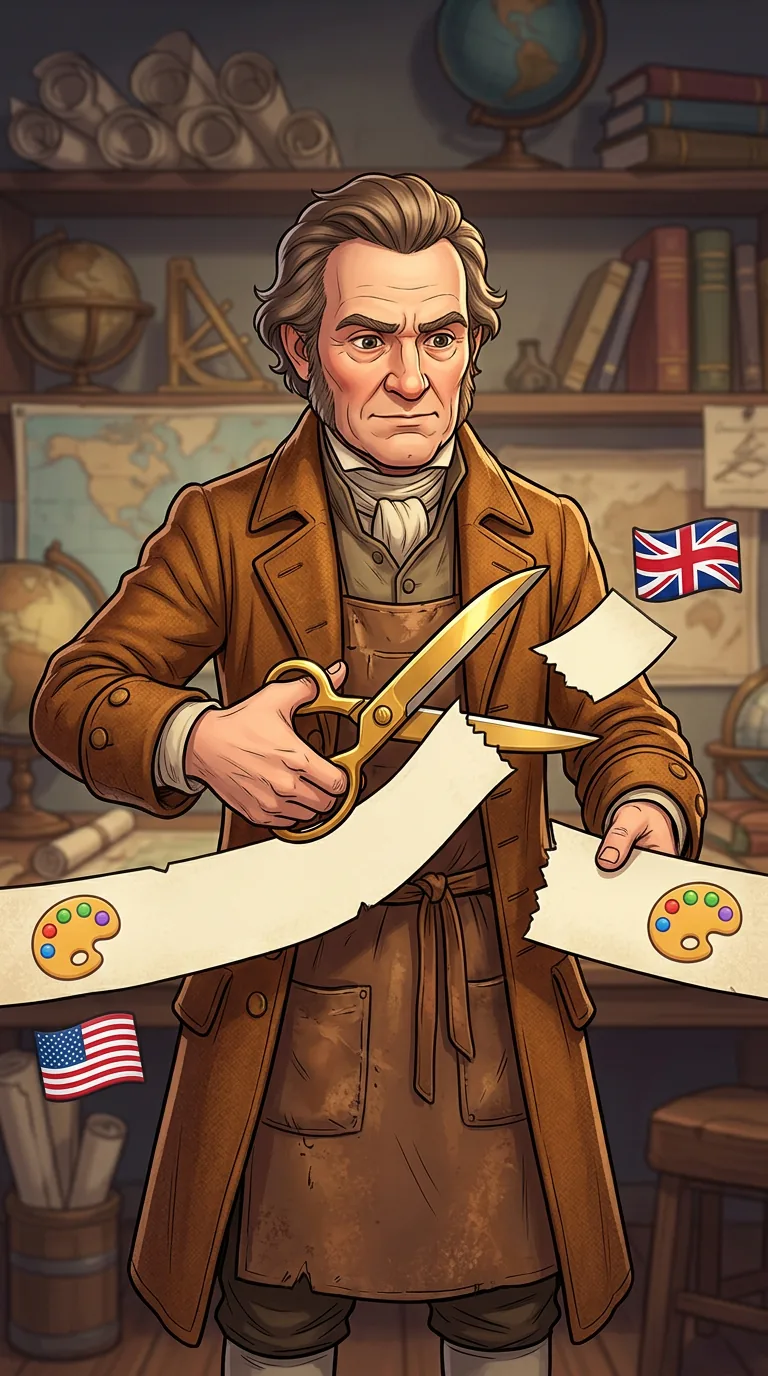
Noah Webster simplified spellings in his 1828 American dictionary on purpose, creating the color/colour and center/centre divides between US and British English.

To 'dust' can mean add or remove dust; to 'cleave' means split apart or cling together. English is quietly full of these self-contradicting words.

With only 'y' carrying the vowel sound, it sneaks past all five standard vowels — a favorite trick question for spelling-bee and trivia fans.

Lexicographers estimate thousands of new words gain real usage each year; English's openness to coining and borrowing makes it grow faster than most languages.

Despite confident theories about ammo belts, fabric bolts and cement trucks, etymologists have never pinned down where this everyday idiom truly came from.

On a standard QWERTY keyboard every one of its letters sits on the left side — a quirk of layout rather than language that touch-typists love to point out.

'The quick brown fox jumps over the lazy dog' is a pangram — a tool typists and font designers use to display or test every letter of the alphabet at once.
The phrase dates to a time when peppering speech with actual French was fashionable; it later became a cheeky apology for using language that wasn't polite at all.