
203Share
Math
In any group of 23 people, there's about a 50% chance two share a birthday.
The 'birthday paradox' relies on pair counting — 23 people make 253 pairs. Intuition expects much higher numbers; the math says 23 is enough.

NOW WATCHING
Math · Facts
The 'birthday paradox' relies on pair counting — 23 people make 253 pairs. Intuition expects much higher numbers; the math says 23 is enough.
 Swipe up or down to explore more
Cantor showed the infinity of real numbers is strictly larger than the infinity of integers. Mathematicians can stack infinities indefinitely above each other.
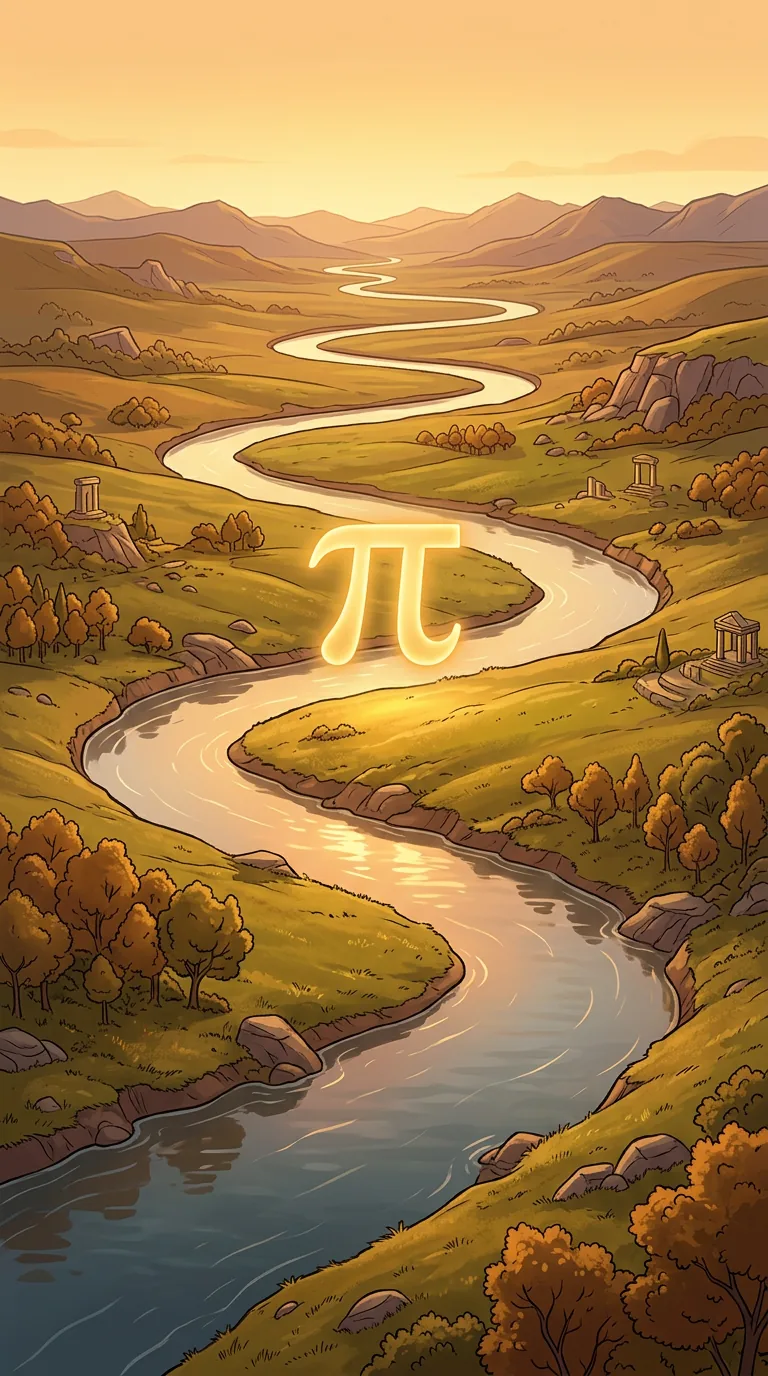
The ratio of a river's length to its straight-line distance averages around π. Pi appears in statistics, quantum mechanics and prime distribution. Circles are only the first place it was noticed.
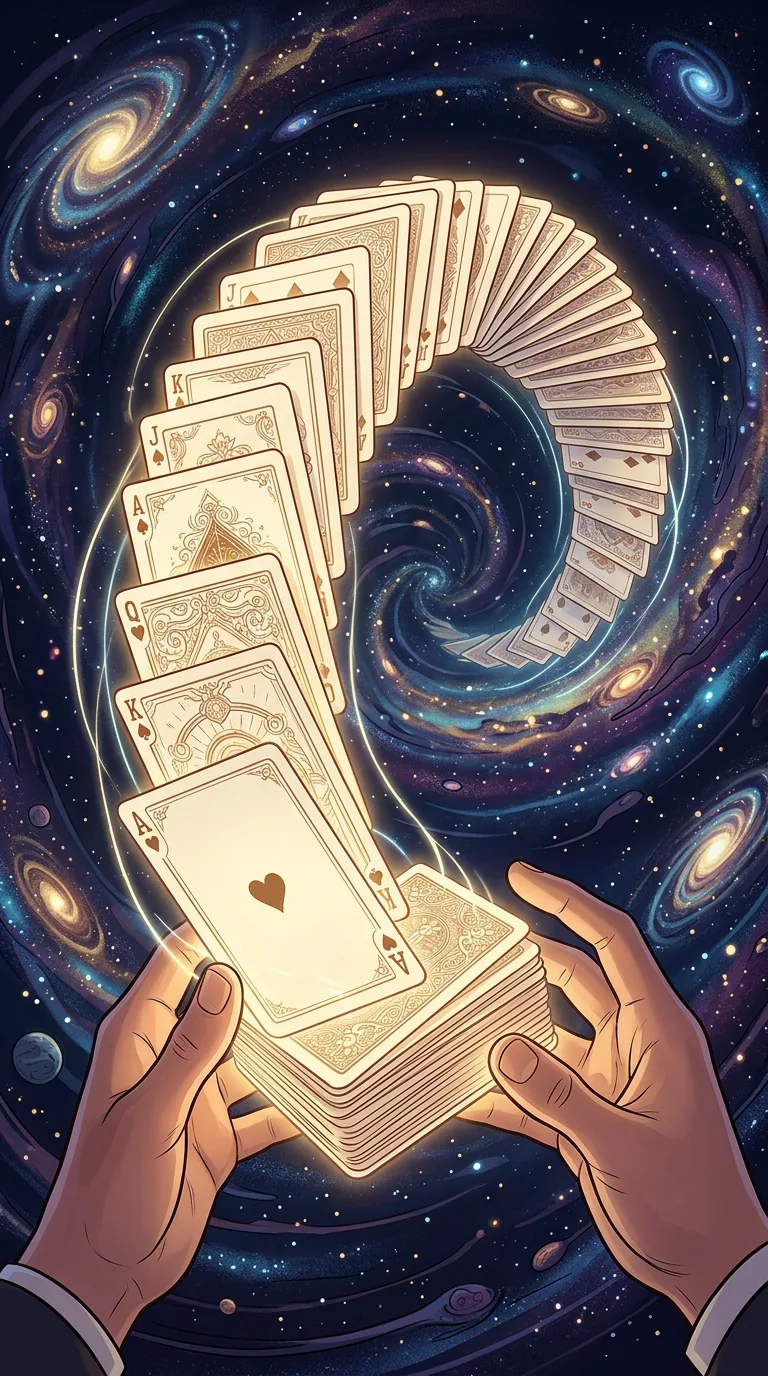
There are 8 × 10⁶⁷ possible orderings — more than the atoms in our galaxy. Every reasonably shuffled deck is almost certainly a configuration no one has ever seen.
Gödel showed that in any rich enough system, true statements exist that cannot be proven within it. Math is incomplete by its own laws.
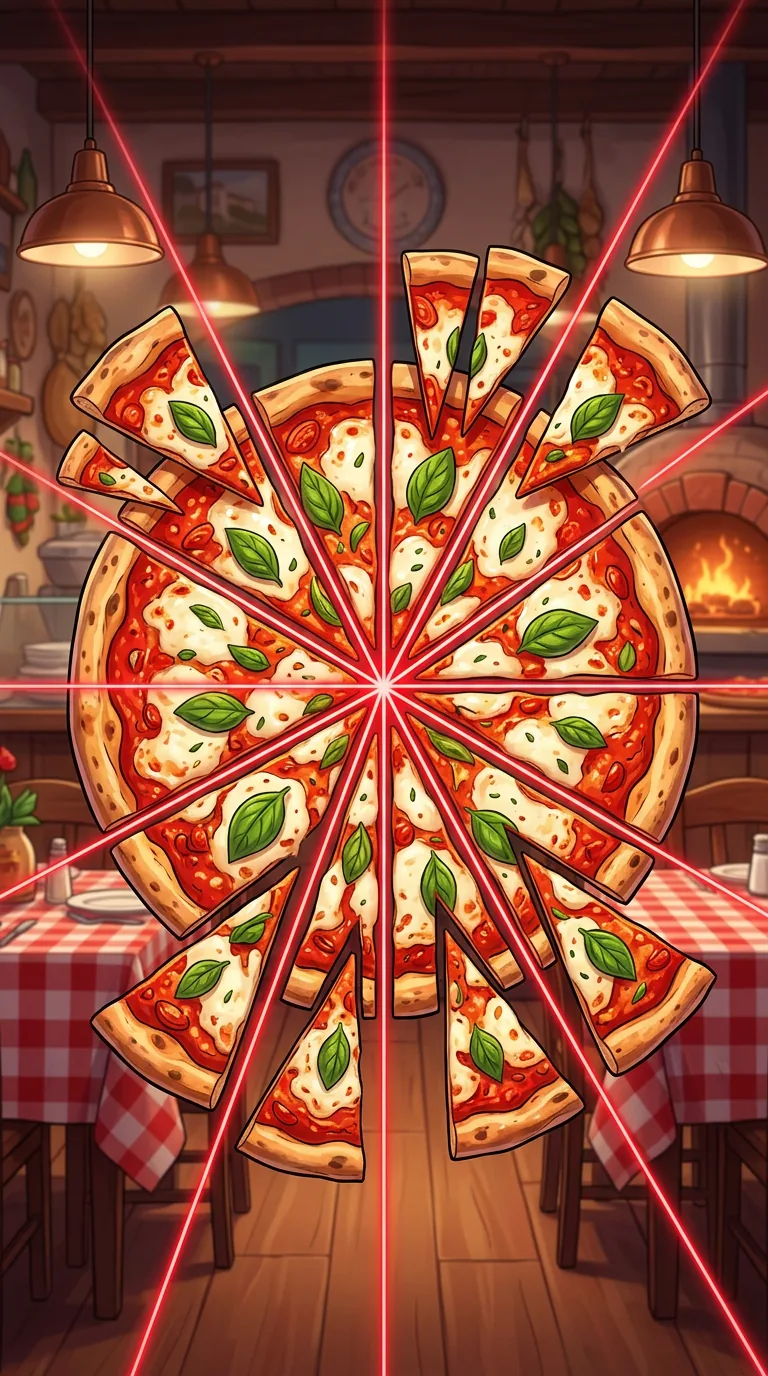
Each new line that crosses every previous one adds slices equal to its number — line 7 adds 7 pieces, totaling 29.

Because 7 × 11 × 13 equals 1001, the trick always works — 467 becomes 467,467 instantly without calculation.

Sticking wins 1 in 3 games, switching wins 2 in 3 — a result that fooled mathematicians and PhDs for years.

Each fold doubles thickness, so 2 raised to the 42nd power × 0.1 millimeter already exceeds Earth-Moon distance.

Three rigorous proofs confirm it — algebra, limits, and decimal expansion all show the values are exactly equal.

Both have exactly one hole, and topology only cares about holes — you could deform one into the other smoothly.

Eight out-shuffles for a 52-card deck, or 26 in-shuffles — the cycle length is mathematically guaranteed every time.
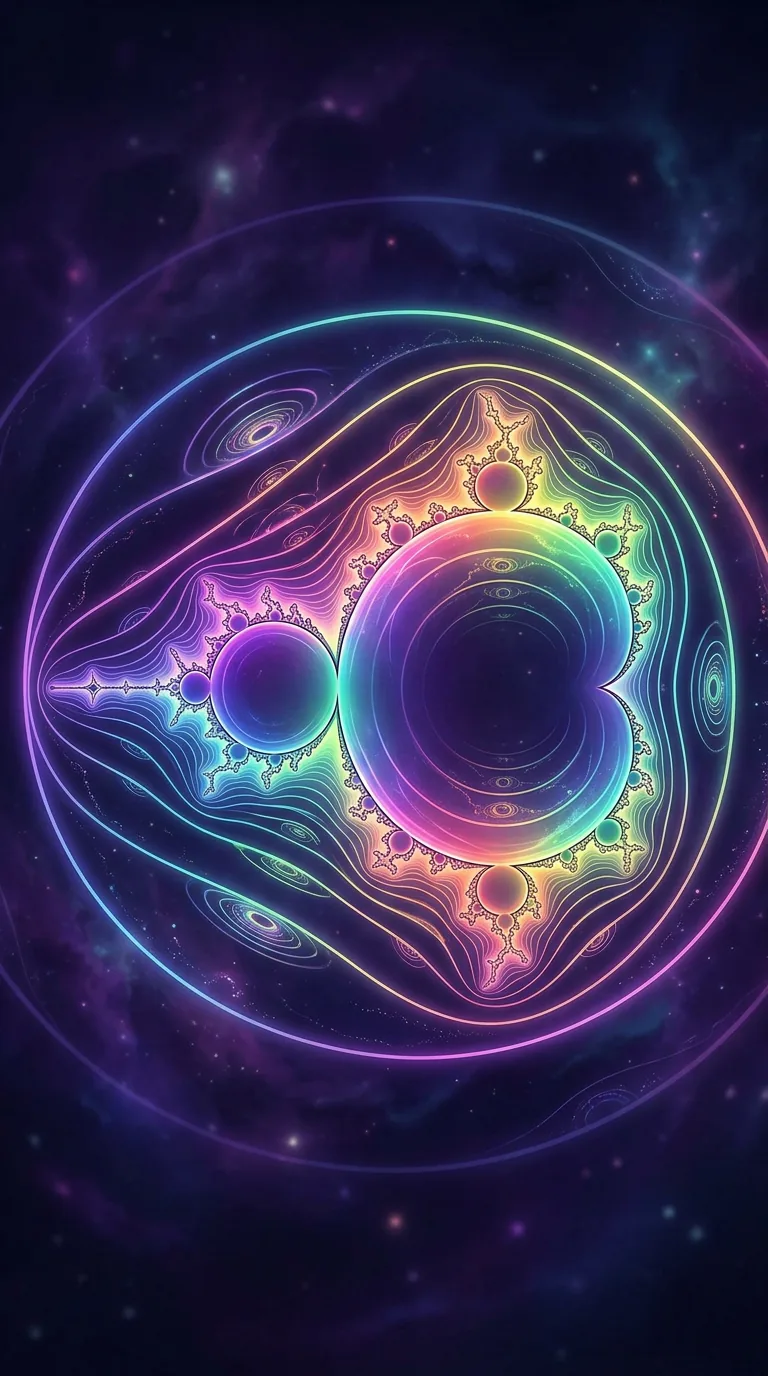
A simple formula z = z² + c generates a fractal whose boundary reveals new structures at every magnification level.
Through analytic continuation of the Riemann zeta function — and physicists use this result in real string theory.

Using the axiom of choice, you cut a sphere into five non-measurable pieces and rebuild two copies of the original.
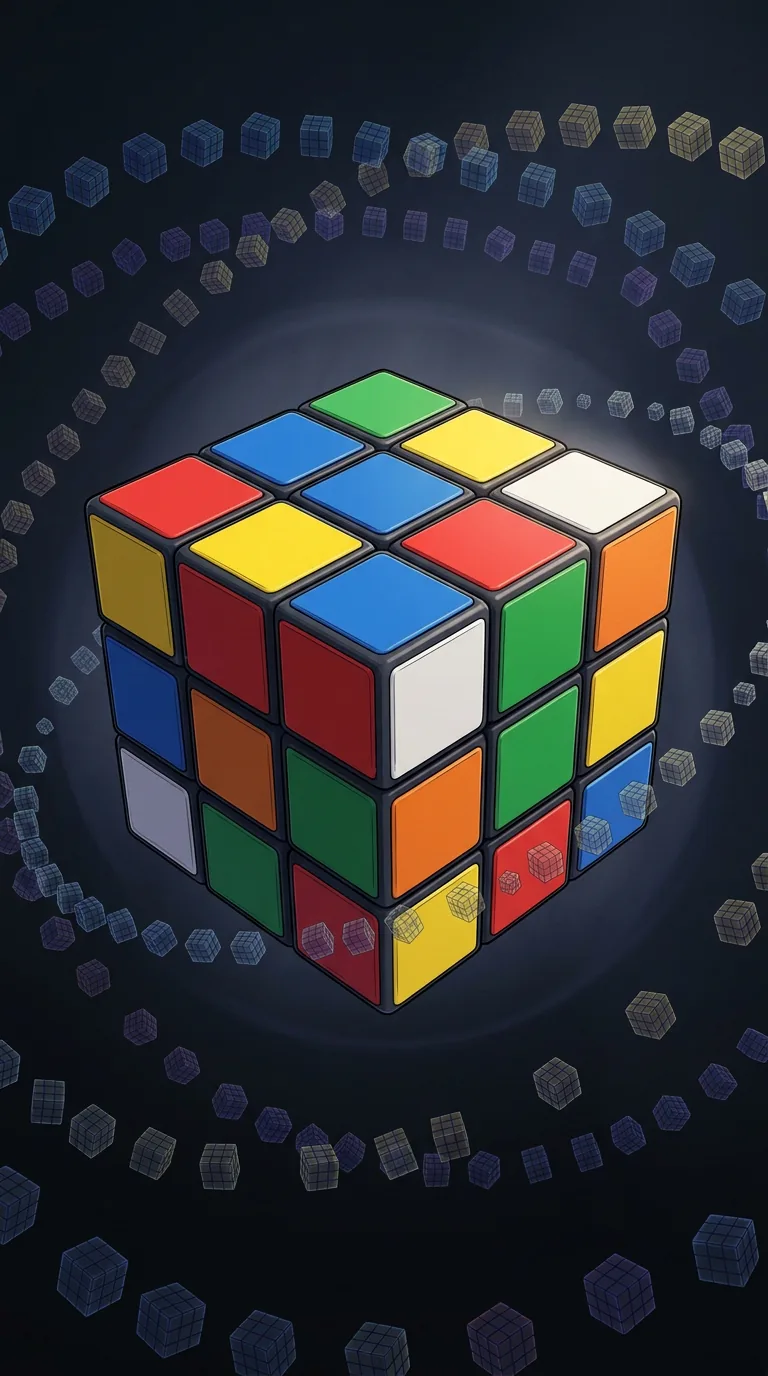
Over 43 quintillion configurations — but every single state can be solved in 20 moves or fewer, proved by computer.

Physicists modeled coin geometry and air resistance — thicker coins like the nickel land on edge surprisingly often.

Each number is the sum of the previous two, producing the golden ratio — nature most efficient packing pattern.
Goldbach conjecture from 1742 holds for every number tested up to 4 × 10^18 but stays mathematically unproven.

The Pythagoreans believed all numbers were rational — Hippasus proof shattered the cult, so they killed him at sea.

9 × 47 = 423, and 4 + 2 + 3 = 9. The pattern works for every multiple of 9 because of base-10 arithmetic.

The Nash equilibrium of the Prisoner Dilemma rewards betrayal — even though mutual cooperation gives both more.

Two raised to the 32nd power exhausts every combination — modern GPUs blow through it in under a single second.
Approximately 2.71828, e is the unique base where the rate of growth equals the current value at every moment.

A 1992 Virginia syndicate did exactly this for a 27 million dollar jackpot — they bought 5 million tickets and walked away rich.