
LESSON 3 · Nature-Inspired Innovation
Termite Ventilation
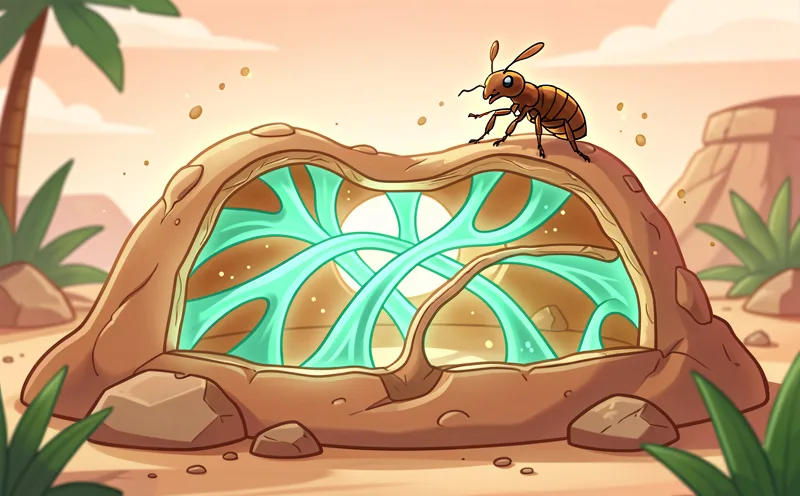
A termite colony lives in a buried nest where it farms the fungus it eats. Up in the heat of the African savanna, the towering mud mound above the nest is not really an air conditioner. Its main job is breathing: the termites and their fungus give off a constant stream of carbon dioxide, and the mound's job is to vent that stale gas and pull in fresh air, all with no power at all.
The mound is riddled with channels, and as outside winds gust and the air swings between cold nights and scorching afternoons, those swings drive fresh air through the structure, refreshing the nest's air much like a lung trades stale air for new. The thick mud walls and the surrounding earth also act as thermal mass, softening the daily temperature swing so the nest stays steadier than the air outside, while its temperature still drifts up and down with the soil over the seasons. It is ventilation made entirely of mud and airflow.
The Eastgate Centre copies the mound's logic with concrete instead of mud. At night, fans pull in cool outside air and run it across the building's heavy floors and walls, chilling that mass like an ice block.
Through the hot day, the cooled concrete quietly soaks up heat from the offices, and warm stale air drifts up and out through tall vents. The trick is thermal mass plus airflow rather than a power-hungry chiller. The termites worked it out long before engineers did.